Every Monograph a Movie

Are students learning the best way?

by Marshall T. Poe (University of Iowa)
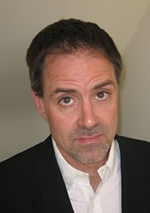
Although we often forget it, reading is a profoundly unnatural act. We were not evolved to read. Eyes are for seeing, ears are for hearing, but we have nothing specifically designed for reading. That makes reading difficult in two ways. First, it’s hard to learn to read, largely because you have to rewire your brain to do it. That takes a lot of time and effort, so much so that some people never learn to read well at all. Second, even if you have learned to read well, it’s often not physically pleasurable. Natural selection gave us psychological reward systems that favor listening and watching. We generally like to listen and watch regardless of what we are listening to or looking at. In short, we were built to enjoy listening and watching more than reading. The proof of that is manifest. Over the Continue reading “Every Monograph a Movie”

My Mission is to Use My Talents and Help Others do the Same

What is your mission?

an Interview with Beth Adubato (Rutgers)

Q4Colleges: So what’s your personal mission and how did you come by it?
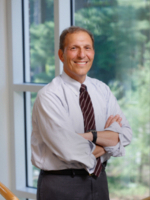
Beth: Well I was thinking about it and it sounds like a Miss America answer; I hate to say it but it’s really true. My personal mission is to make use of all the talents I was given, and try and help and inspire people to do the same. And to raise a child that has the same sense of caring about community. Continue reading “My Mission is to Use My Talents and Help Others do the Same”

Over Planning is Not the Answer in Today’s Uncertain World

How should you organize your life?

by Len Schlesinger  (Babson)

The world was a very certain place when I was growing up in New York City. From an early age, I had my life planned out.  Everything was marvelously scripted: I was going to go to a specialized high school; I was going to go to a great university; and I was going to be a lawyer. Despite the fact that my family had no money, through my academic performance I was able to excel in elementary school and junior high school and believed that I could do just about anything I wanted. And much of what I wanted came true. I went to an Ivy League college—and then I got to day one of law school and discovered that I had absolutely no interest in law as a career. Continue reading “Over Planning is Not the Answer in Today’s Uncertain World”

Is Cheating by Colleges Just Another Clever Marketing Ploy?

Should “caveat emptor” be the operative philosophy when we  market to students, or should we hold ourselves to a higher standard than, say, a car manufacturer?

by Brooke Allen (Q4Colleges.com)

Emory University confessed that for 11 years it has been fudging data it sent in for U. S. News & World Report’s Best Colleges rankings. The publisher said that, “Our preliminary calculations show that the misreported data would not have changed the school’s ranking in the past two years (No. 20) and would likely have had a small to negligible effect in the several years prior.” (Read the article here.)

This second confession by U. S. News only serves to prove that their ranking methodology is deeply flawed. Since integrity is such a major part of character, confessed cheating should drop you to Dead Last in the rankings, and a cover-up should get you barred altogether pending review by the accrediting authorities. Continue reading “Is Cheating by Colleges Just Another Clever Marketing Ploy?”

Those Who Can’t: 27 Ways of Looking at a Classroom

What have you learned about teaching?

by David L. Kirp (Berkeley)

1. I was a second-year graduate student when I got hired – more years ago than I care to remember – for my first teaching job as an instructor of something called “expository writing.” Make up a course, I was told, there’s nothing to it. But even as I was ordering books and inventing paper topics for the unsuspecting freshmen, I just knew that everybody involved, especially the students, understood that the enterprise was farcical. What did I, barely lettered and entirely untrained, have to say to ferociously smart 18-year-olds? How long would it take before someone dropped the curtain to end the play?

As I approached the classroom that first day, I peered in at the 20 slouching bodies, then stared at Continue reading “Those Who Can’t: 27 Ways of Looking at a Classroom”

Colleges Cost Too Much Because Faculty Lacks Power

Where is higher education headed?

By Robert E. Martin (Centre College)

Surveys reveal that the public believes a college education is essential but too expensive. People feel squeezed between the cost and the necessity. At the same time, public colleges complain thatthey are being squeezed by declining state support and increasing pressure to educate larger numbers of less-prepared students.

Yet society has provided higher education with a river of new real revenues over the past several decades. Since nonprofit institutions of higher education follow a balanced-budget model, expenditures are capped by revenues. Therefore the real cost per student cannot increase without a corresponding increase in real revenues. So the problem has not been too little revenue.

Nevertheless, college affordability has Continue reading “Colleges Cost Too Much Because Faculty Lacks Power”

Higher Education’s Forgotten Universities

What kind of schools should students consider?

by Bruce B. Henderson (Western Carolina)

A longtime observer of higher education once called the regional state colleges and universities the “colleges of the forgotten Americans.” He meant that as a compliment, praising the regionals for democratizing American higher education. More often, the state regional universities (long known as the state comprehensive universities and now categorized as public master’s universities in the Carnegie system) have been the forgotten universities of America. In the literature on higher education, including much of the empirical research, books on university reform, and in the general higher education media, the state regional universities are frequently ignored. Research universities, liberal arts colleges, and even community colleges get more attention. In a rare instance when the Chronicle of Higher Education mentioned the regional universities they were described as “the undistinguished middle child of higher education.” Continue reading “Higher Education’s Forgotten Universities”

Some Artists Really Are Too Cool for School

Is higher education the best thing for everyone?

By David Yaffe (Syracuse)

I just finished teaching a poetry class in which nearly every poet had a degree from the Ivy League or Seven Sisters. But plenty of great artists never went to college, or else they dropped out. Walt Whitman and Hart Crane didn’t seem to miss college degrees, and in Tin Pan Alley, neither did George and Ira Gershwin.

True, Cole Porter graduated from Yale, where he was the greatest Whiffenpoof ever. The inventor of the modern incarnation of singer-songwriter, Bob Dylan, blew off classes at the University of Minnesota for a one-way ticket to New York City, Woody Guthrie, and destiny, but Guthrie’s fellow troubadour Pete Seeger attended Harvard (before dropping out), where his father was a musicologist. Suzanne Vega majored in English at Barnard, and Paul Simon did the same at Queens College and even did a little time in law school. (Like a litigator, Simon would sometimes begin his verses with facts: “They’ve got a wall in China / It’s a thousand miles long.”)

Leonard Cohen not only has a literature degree from Continue reading “Some Artists Really Are Too Cool for School”

There’s No Learning When Nobody’s Listening

How much do students know?

By Nadine Dolby (Purdue)

I decided to call the panel “Listening to Parents.” As I began the organizing process last November, I was sure that “parents” was the important word in the title. After more than 20 years in teacher education, I had become frustrated and saddened by the attitudes of our undergraduate students toward parents. Although they were only 19- or 20-year-old freshmen or sophomores, our undergraduates already felt that they knew more about children and learning than the parents of their prospective students. They saw parents as annoying obstacles who contributed little to nothing to their children’s education.

As a teacher educator who focuses on multicultural issues, I also realized that the attitudes of our mostly white, female, Christian middle-class students toward parents from backgrounds different from their own was even more troubling. Continue reading “There’s No Learning When Nobody’s Listening”

The Role of Elite Institutions

Who gets to be on top?

By William Julius Wilson (Harvard)

The increase in the college premium­—the differential in what is earned by college graduates compared with what is earned by those with high-school diplomas—is a major factor contributing to rising inequality in America. A widely cited study by the economists Claudia Goldin and Lawrence F. Katz, The Race Between Education and Technology, reveals a sharp increase in the salaries of individuals with college diplomas and advanced degrees, because of the need for better-educated workers in our increasingly complex economy. According to Goldin and Katz, the college premium accounted for roughly 60 percent of the growth in wage inequality from 1973 to 2005. Continue reading “The Role of Elite Institutions”