We Should Look to Other Indicators to Measure Worth and Value

Are we evaluating colleges the right way?

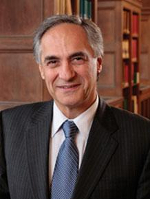
By Arthur M. Hauptman (Consultant)

There is little question that the shift in policy focus in this country over the past decade from access to success has been a positive development. College officials and policy makers at both the federal and state levels now recognize that it is not enough to measure the scope of higher education just in terms of how many students enroll; if we as a nation are to remain globally competitive, it is also critical to ensure that more students actually complete their program and attain a degree. Continue reading “We Should Look to Other Indicators to Measure Worth and Value”

Leading in the Legacy of St. Vincent de Paul

What have you learned about life?

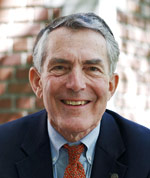
by Roxanne Owens (DePaul)

My husband’s theory is that if he does not have money in his pocket, he can’t spend it.  My counter theory is that if I don’t have money in my pocket, I have to make more frequent trips to the cash station. After checking our account balance and in deference to my husband’s cheapskate attitude (or frugality as he prefers to call it) I withdrew only one crisp $20 bill on a recent trip to the cash station.  I knew that was all I needed for the next few days, as long as I didn’t do anything too indulgent—like give in to a desire for obscenely overpriced coffee drinks for instance. Continue reading “Leading in the Legacy of St. Vincent de Paul”
My Ignorance and Me, in Front of a Classroom

What have you learned about teaching?

by Kase Johnstun (Tacoma CC)

I’m a transplant to Tacoma, Wash., like many. Before packing up the truck, loading up the dogs, and leaving behind a stiff mortgage in Salt Lake City, I heard the warnings and rumors about T-Town. “It stinks.” “Tacoma Aroma.” “Full of crack whores, bums, and gangs.” But when the yellow truck dropped down from Snoqualmie Pass, as we traveled along the Green River, and when we pulled into our apartment complex that sat on the edge of rippling waters of Commencement Bay, I knew the complainers, the voices that dominated chat rooms and review boards, had it wrong. Or maybe they just hadn’t seen Tacoma through the eyes of a transplant and his ignorance. Continue reading “My Ignorance and Me, in Front of a Classroom”

A Lesson In Herd Mentality

How do you teach people to do the right thing?

by Daniel Kittle (Wartburg)

In the syllabus, the title of that day’s class was “Leadership and Cultural Competencies.” As part of an introductory course on the elements of leadership, it was supposed to include a discussion of prejudice and the traits, values, and skills necessary for leaders in our diverse world. But my students were about to encounter intolerance much closer to home.

Earlier in the year, an openly gay man on the college staff had been the victim of vandalism on the campus, with homophobic slurs scratched into the door of his vehicle. I asked the students: What would they have done had they known the identity of the vandal or witnessed the act? How would they have responded if they’d heard someone joking about it? Continue reading “A Lesson In Herd Mentality”

How My Brother’s Death Shaped My Life

Admissions Essay: Indicate a person who has had a significant influence on you, and describe that influence.

By Michael S. Roth (Wesleyan)

Michael Roth tells a very personal story about his deceased brother’s influence, and how he strives for goodness as a way of honoring the brother he never knew. His studies and research on tragedy and loss stem from his family’s own experience with death. Read his inspiring essay from the Wall Street Journal.

Michael Roth is the current president of Wesleyan University and former president of California College of the Arts. He is the author of five books, including Memory, Trauma, and History: Essays on Living with the Past, which was published Fall 2011.

How My Professors Shaped Me

Admissions Essay: Indicate a person who has had a significant influence on you, and describe that influence.

By Catharine Hill (Vassar)

For Catharine Hill, it was more than one person who made an impact in her life. It was two specific professors that encouraged her to take her love of economics and education and merge the two, thus bringing her to the position she holds today. You can read about the influence they held in her essay for the Wall Street Journal.

Catharine Hill is the president of Vassar College and former provost at Williams College. An economist by trade, she previously worked for The World Bank and the Congressional Budget Office.

Why You Need To Live The Question

Admissions Essay: Comment on: “At present you need to live the question.” –Rainer Maria Rilke, translated from the German by Joan M. Burnham

By Robert J. Zimmer (U of Chicago)

Robert Zimmer discusses what it means to live the question – to look at the world with wonder. The key to living the question (according to Zimmer): challenge your assumptions, question others and listen. Read more from his Wall Street Journal essay.

Robert Zimmer is a mathematician and former provost of Brown University. He is the current president of the University of Chicago.

What Diversity Means To Me

By Colin Diver (Reed)

Essay Question: What has demonstrated the need for diversity to you?

Colin Diver tells about his experience attacking a mugger and how it affected his views on diversity and community. Was he right for defending a woman against a poor, brown-skinned criminal? Or was he inflicting his white, upper-middle class beliefs on his now multi-cultural South Boston neighborhood? Diver tells his story story in an essay for the Wall Street Journal.

Colin Diver is an attorney who held several positions in Massachusetts government, including special counsel to former Boston mayor Kevin White. He is the former Dean of the University of Pennsylvania Law School and current president of Reed College.

How Nelson Mandela Influenced Me

Admissions Essay: Describe a character in fiction, a historical figure, or a creative work (as in art, music, science, etc.) that has had an influence on you, and explain that influence.

By Marvin Krislov (Oberlin)

For Marvin Krislov, no one made a bigger impact on his life than Nelson Mandela. His desire for social change and equality led him to study Mandela’s life and even visit the prison in which Mandela was incarcerated. Mandela is a major influence for his book on affirmative action in higher education. Read Krislov’s Wall Street Journal essay on Mandela’s influence.

Marvin Krislov is the current president of Oberlin College and the former vice-president and general counsel for the University of Michigan. He is co-author of the book, The Next 25 Years: Affirmative Action in Higher Education in the United States and South Africa.

Why ‘Just Plain Fun’ Is Good For You

Admissions Essay: Although it may appear to the contrary, we do know that people have a life beyond what they do to get into college. Tell us about an experience you’ve had outside your formal classroom and extracurricular activities that was just plain fun and why.

By David Oxtoby (Pomona)

David Oxtoby’s best experiences were on a bike. From 100-mile races in California to leisurely rides in France, Oxtoby is living life to the fullest when his feet are hitting the pedals. He wrote about some of his best biking experiences for the Wall Street Journal.

David Oxtoby is a theoretical chemist and president of Pomona College. He is the author of numerous scientific articles and books, including the Principles of Modern Chemistry and Chemistry: Science of Change.