Too Much Higher Education

Are too many students going to college?

by Walter E. Williams
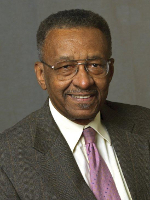
Too much of anything is just as much a misallocation of resources as it is too little, and that applies to higher education just as it applies to everything else. A recent study from The Center for College Affordability and Productivity titled “From Wall Street to Wal-Mart,” by Richard Vedder, Christopher Denhart, Matthew Denhart, Christopher Matgouranis and Jonathan Robe, explains that college education for many is a waste of time and money. More than one-third of currently working college graduates are in jobs that do not require a degree. An essay by Vedder that complements the CCAP study reports that there are “one-third of a million waiters and waitresses with college degrees.” The study says Vedder — distinguished professor of economics at Ohio University, an adjunct scholar at the American Enterprise Institute and director of CCAP — “was startled a year ago when the person he hired to cut down a tree had a master’s degree in history, the fellow who fixed his furnace was a mathematics graduate, and, more recently, a TSA airport inspector (whose job it was to ensure that we took our shoes off while going through security) was a recent college graduate.”

The nation’s college problem is far deeper than Continue reading “Too Much Higher Education”

The Narrowing of the American Mind

Are we preparing students for the professional world?

By Carol Geary Schneider (AAC&U)

Envision this: You’re an employer, interviewing a candidate for an entry-level position in your unit. The applicant is very direct.

“I’m in it for the money,” she explains. “I make all my choices on the basis of how much I can expect to earn. I chose my major based on earnings reports. I applied for this particular position because you pay more than any other company in the region. Actually, I’m a bit sorry that I didn’t stop with a two-year degree, since I read in the newspaper last week that I could have made almost as much in my first job with half the time spent on college. I hate thinking about all the time I wasted.”

You have no difficulty deciding not to hire this new graduate. The job applicant who arrives talking money first, money only, lacks common sense, and career sense, too.

And yet our candid candidate did Continue reading “The Narrowing of the American Mind”

Creative Plagiarism

Is imitation a form of flattery – or stealing?

By Paula Marantz Cohen (Drexel)

In recent years, I have come across something that I call creative plagiarism. Almost every time I teach fiction-writing, one or two students seem compelled to write a story that closely resembles a published work we’ve read. These students are not trying to perpetrate a deception, since the material they incorporate has been previously discussed by the class, usually only a week or two earlier.

I was able to shed light on what might be going on through an exercise I did with my creative-writing class. I asked them to read two short stories for discussion at our next meeting. I provided the stories in photocopy, with the authors and the dates removed.

The stories were “Mrs. Adis,” by the British writer Sheila Kaye-Smith, published inThe Century Magazine in 1922, and “Sanctuary,” by the African-American writer Nella Larsen, published in the magazine Forum in 1930. Larsen’s story, as those familiar with her biography will know, was quickly viewed as a Continue reading “Creative Plagiarism”

Why It’s OK to Rat On Other Students

How do you teach people to do the right thing?

by Warren Goldstein

Like many people in the academy, I have found myself uneasily stewing over the murders at Virginia Tech. My students and I have spent far too much time glancing over at our classroom door, wondering whether we would have been able to hold it shut if a gunman had wanted in; would I have had the courage of Liviu Librescu, who students said died protecting them?

I was lucky; I didn’t have to deal with Seung-Hui Cho, unlike my poor colleagues in the Virginia Tech English department, who had formed a departmental task force to discuss him. At least they tried. They resisted the Continue reading “Why It’s OK to Rat On Other Students”

Teaching to the World From Central New Jersey

What have you learned about teaching?

by Mitchell Duneier

A few months ago, just as the campus of Princeton University had grown nearly silent after commencement, 40,000 students from 113 countries arrived here via the Internet to take a free course in introductory sociology. The noncredit Princeton offering came about through a collaboration between Coursera, a new venture in online learning, and 16 universities, including my own.

When my class was announced last spring, I was both excited and nervous. Unlike computer science and other subjects in which the answers are pretty much the same around the globe, sociology can be very Continue reading “Teaching to the World From Central New Jersey”

Photocopy My Book Chapter? You Don’t Even Have to Ask

Do we need to pay for knowledge?

By Zick Rubin (Harvard, Brandeis)

Last month, as college students across the country prepared to head back to campuses, my fax machine coughed out my annual “Request for Permission” from the Copyright Clearance Center, the corporation that is one of the world’s largest brokers of licenses to copy other people’s work.

As in past years, the center asked me how much I wanted to charge to permit Middle Earth College to include a copy of Chapter 5 of my book, Liking and Loving: An Invitation to Social Psychology, in a course pack for the 18 students enrolled in Professor McClain’s Management 710 this fall. (I’ve changed the names of the college, the professor, and the course.)

If past experience were a guide, I could name Continue reading “Photocopy My Book Chapter? You Don’t Even Have to Ask”

Keyword: Placement

Do we have a moral obligation to care about our students’ futures?

By Leonard Cassuto (Fordham)

We can all agree, I expect, that the practical goal of graduate education is placement of graduates. But what does “placement” mean? Academics use the word without thinking much about it.

We can learn a lot about a practice by looking closely at how we describe it. Bruce Burgett and Glenn Hendler, editors of the 2007 book Keywords for American Cultural Studies, say the study of such words shows “the way we think about the work we do.” Looking at the “genealogies” of keywords then, we can see not only where those words come from but also how they structure fields of inquiry, and where future thinking may go in those fields.

“Placement” is a great keyword for Continue reading “Keyword: Placement”

You’ve Got Mail. And Better Things to Do.

How can we communicate more effectively?

By Jason B. Jones (Central Connecticut State)

Midway through his career, my father moved from the faculty of his community college into administration, where he has remained for some 20 years now. In those decades, his only real regret has been that he must use his college-issued cellphone. That phone means his attention is always potentially divided because he is, in principle, always available to his campus.

What for my father is a college-imposed shackle has become for many of us a self-chosen cage: Continue reading “You’ve Got Mail. And Better Things to Do.”

To Encourage Civic Engagement, Start in Elementary School

by Judith Pace (U of San Francisco)

The Educational Testing Service report on the correlation between income and education and levels of political and civic engagement (“Education and Income Levels Are Key Predictors of Civic Involvement, Report Says,” The Chronicle, May 23) is not news. Educational researchers call this the civic empowerment gap, or democracy divide, and trace it not only to sociological factors but also to unequal democratic learning opportunities in secondary schools. Students in higher-track classes, who are disproportionately European- or Asian-American from middle-class or affluent families, enjoy more discussions of important public issues and experiential curricular activities than do students in lower-track classes, who are disproportionately Continue reading “To Encourage Civic Engagement, Start in Elementary School”

The Best-Laid Teaching Schemes

What do academics do wrong?

By James M. Lang (Assumption)

Over winter break, I made the decision to experiment with my survey course, which covers British and Irish literature from the end of the 18th century to the present. I wanted to see if I could inject new life into a course structure that has seemed, to me at least, increasingly tired and outdated.

I had really begun to wonder why we—by which I mean both my department and the discipline as a whole—felt it necessary to push our students through these hit-and-run overviews of the history of literature. When we’re covering James Joyce in 50 minutes on Monday, Virginia Woolf on Wednesday, and T.S. Eliot on Friday, are we really helping them learn content that they understand, that matters to them, and that will remain in their brains beyond the span of the course?

Last spring, on my most recent run through the survey, I experimented with Continue reading “The Best-Laid Teaching Schemes”